Trauma & Growth
You Are Still Inside the Story You Think Is Over

There is a particular kind of silence that settles over a life after the storm has passed.
You've made it through. You've rebuilt, or you've started to. You've learned how to answer when people ask how are you without the full weight of what that question used to carry. You've found a version of normal. You've moved forward — not because the past became lighter, but because you got stronger, or just more practiced at carrying it.
And somewhere along the way, you closed the chapter. You had to. You couldn't keep living in it.
But here's what I've come to believe — and what story after story has confirmed — about the chapters we think we've left behind:
They are not finished with us yet.
The Difference Between Surviving and Understanding
Surviving is what the body does. It keeps going. It finds food, finds sleep, finds the next breath. Survival is extraordinary — it is not small, not easy, not guaranteed — but it is not the same as understanding.
Understanding is what happens when you finally have the distance to turn around and look at what you lived through. Not to relive it. Not to be swallowed by it again. But to ask the question that survival doesn't have time for:
What did that mean?
Not: what did it do to me?
Not: why did it happen?
But: what does it mean — now, from here, from who I've become?
That question changes depending on when you ask it. Ask it at twenty-three, fresh from the wreckage, and you'll get one answer. Ask it at forty-one, with a decade of distance and a life rebuilt, and the answer shifts. Ask it at sixty, having raised children through your own unfinished healing, and it shifts again.
What happened to you is permanent. What it means is not.
The Part That Keeps Becoming
Post-traumatic growth is a strange and undersung phenomenon. We talk often about post-traumatic stress — the way the nervous system holds the past, the way the body braces for threats that have already passed. That's real. It deserves the attention it gets.
But there is also this: the way people who have been through the worst things sometimes emerge with a specific kind of clarity. A deeper capacity for grief, yes — but also for joy. A narrower tolerance for what doesn't matter, and a wider one for what does. A refusal to perform a life that isn't theirs.
This growth doesn't erase the pain. It doesn't justify it. It doesn't mean the hard thing was worth it, or that you should be grateful for your suffering. None of that is true, and any framework that suggests it is can be set down immediately.
What is true is simpler: the hard thing happened, and you are not the same person who it happened to. And the distance between who you were then and who you are now — that gap, that becoming — is the territory of meaning.
And that territory has a shape. It has a story. It is worth knowing.
Why Speaking It Changes Everything
There is something about saying a story out loud — not writing it, not turning it over alone at 2 a.m. in the dark, but speaking it to a witness — that unlocks what private recollection cannot.
When you speak your story, you hear it differently. You notice what you skip over. You notice what your voice does when you reach certain parts. You notice the moments when you say I don't know why I'm mentioning this right before you say the most important thing.
The spoken story is honest in a way that's hard to achieve alone. It finds things you didn't know were there.
That's the principle behind what we've built at Rewrite Your Story. There's no writing involved — you simply speak, guided through a thoughtful two-to-three hour process, while an AI Scribe listens and shapes what you share into something lasting: a 200-to-300-page hardcover memoir, delivered to your door.
Not a journal. Not a transcript. A book — your book. The kind that sits on a shelf. That your children will someday find. That you'll open years from now and remember who you were when you finally told the truth about your life.
Who This Is For
It is for the person who survived something that deserved more than survival. The veteran who came home but couldn't explain what home felt like after. The woman who started over — after a marriage, a career, a version of herself she had outgrown. The person in recovery who kept showing up, day after day, not yet knowing that the life being quietly rebuilt in those acts of return would someday be worth telling.
And when you claim your story, you make it possible for someone else to claim theirs. Each purchase funds a free memoir journey for a veteran, a woman starting over, or a person in recovery — because no one's story should go untold for lack of means.
The founding price is $397 for the first 100 members. After that, it moves to $497.
The Story Is Still Being Written
The chapter you thought was closed is still generating meaning. The years you'd rather not revisit are still yielding something — wisdom, texture, a kind of knowing that only comes from having gone through the thing and arrived somewhere else.
You don't have to stay in the past to honor it. You don't have to forgive what isn't forgivable, or perform a healing you haven't completed. You just have to be willing, for a few hours, to turn around. To look. To let your own voice tell the story — and to receive what it gives back to you.
That's what a memoir is. Not a record of what happened. A reckoning with what it means.
If you're ready to find out what your story has been saying all along, we'd love to be part of that.
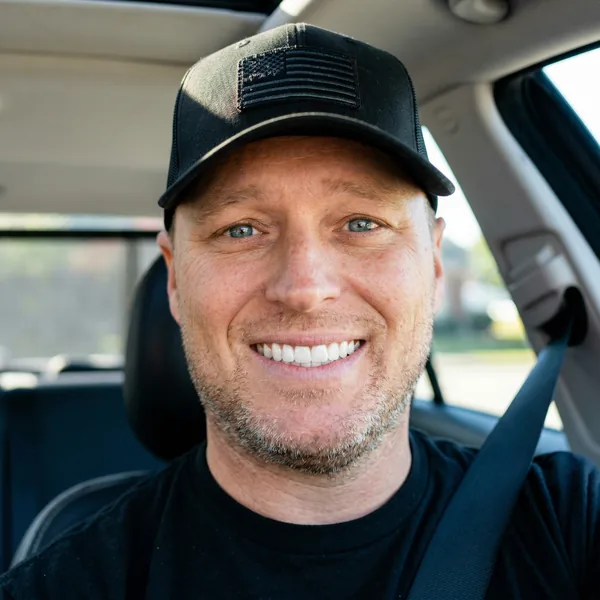
Brian Kiplinger is the founder of Rewrite Your Story — not a therapist, but someone who lived it and built the tool he wishes had existed. Why he built it →
If you’re in crisis, please reach out now: call or text 988 (Suicide & Crisis Lifeline, 24/7). Veterans: dial 988, then press 1, or text 838255. Rewrite Your Story is not therapy and is not a substitute for professional care.