Veterans
You Were Asked to Be Unbreakable. Now It's Time to Be Human.

🤝 If You Are in Crisis Right Now
988 Suicide & Crisis Lifeline: Call or text 988 — free, confidential, available 24 hours a day, 7 days a week.
Veterans Crisis Line: Call 988 then press 1, or text 838255, or chat at VeteransCrisisLine.net. Responders who understand what veterans carry are available right now.
The Weight You Were Never Given Words For
There is something that happens to those who serve — soldiers, sailors, airmen, Marines, guardsmen — that is almost never spoken of in the way it deserves to be. Something that comes home in the body before it arrives in the mind. It shows up in the way a car backfiring too close makes your hand move before your thoughts do. It lives in the dreams that feel more real than the morning. It is in the pause before you answer the question How are you doing? — the breath you take, the calculation you run, the version of yourself you choose to present instead of the one who is actually standing there.
You were trained to be reliable. Stoic. Mission-first. And you were extraordinary at it. The military does not build people who fall apart easily. But it also does not build easy access to what you actually feel. That was not the assignment.
The assignment was to keep going.
So you did.
What They Don't Tell You About Coming Home
Coming home is its own kind of deployment. The terrain is familiar — your family's faces, the smell of your house, a refrigerator full of food — but something inside you has been rearranged. The vocabulary you built over there does not translate. The things that felt like survival in-theater feel like symptoms in a grocery store aisle. And the people you love most are trying to understand something they were never given the map to.
Many veterans describe a particular kind of grief: mourning a version of themselves they cannot find anymore. Not just mourning what happened during service, but mourning who they were before — and facing the uncertainty of who they are supposed to be now. These are not signs of fracture. They are signs of profound human experience. You did not break. You changed. And change that deep and real and bone-level asks to be witnessed.
It asks to be told.
Why Silence Is Not the Same as Strength
We live in a culture that has confused silence with strength for so long that most veterans never even question it. The story stays inside because that is what was modeled. Because it felt safe. Because it seemed like the right thing to do for the kids who didn't need to know, for the partner already stretched thin, for the parents who had worried enough.
But silence has a weight, too.
It accumulates. It compresses years of extraordinary experience into something dense and unresolvable, and it lives in the body as tension, as distance, as numbness, as a restlessness that never quite settles. The story wants out — not to be performed or pitied, but to be held somewhere outside of you. Not dissolved. Not explained away. Just given a shape it can rest in.
That is what narrative does. It takes the shapeless thing inside you and gives it a beginning, a middle, and a form you can look at from the outside. That distance is not detachment. It is perspective. And perspective, for many veterans, is the first time they have been able to breathe clearly in years.
Your Story Is Not Just Yours
One of the most profound shifts that happens when veterans begin to tell their stories is the realization: this was never only about me.
Your story belongs to your children, who will carry some version of it in their own bodies whether you share it with them or not. It belongs to the next young person considering service, who deserves honest accounts of what that path actually looks and feels like from the inside. It belongs to a culture still learning — slowly, imperfectly — how to honor veterans beyond bumper stickers and one-day holidays.
And it belongs to the version of you who has not yet spoken. The one who lived through something extraordinary and has been waiting, quietly and patiently, for the right container to hold it.
That container exists.
What It Looks Like to Finally Tell It
Rewrite Your Story was built for moments exactly like this one.
This is not a writing class. You do not have to sit alone at a keyboard trying to find words for things that have never quite fit into words. Instead, you speak — out loud, at your own pace, guided through a process designed to draw your story out the way a great listener does. Two to three hours of guided speaking. Your voice. Your pauses. Your language.
From those conversations, an AI Scribe crafts a 200–300 page hardcover memoir. Your story, in print — something you can hold in your hands, something your family can keep long after you are gone, something that outlasts the silence you carried for so many years.
The founding price is $397. That is a fraction of what a project like this would cost through any traditional publishing process. And because many veterans understand the weight of leaving someone behind, Rewrite Your Story includes a buy-one-give-one program: for every memoir created, another is made available to someone who cannot afford it.
Your story can help fund someone else's healing.
You Are Not Too Late
There is a particular lie that follows veterans home alongside everything else they carry. It whispers that too much time has passed. That no one would want to hear it now. That the details are fuzzy and the point is lost and what would you even say after all these years.
None of that is true.
What you experienced matters. What you saw matters. What it cost you — and what it gave you, the strange and complicated gifts of hard experience — matters. The fact that it is complicated, and painful, and sometimes beautiful, and sometimes terrible, and impossible to reduce to a clean narrative of sacrifice and heroism: that is exactly what makes it worth telling.
The world does not need another polished, sanitized account of military service. It needs the honest one. The one that is messy and real and still trying to find its shape. The one that begins with what you remember and ends somewhere you have not yet been.
The one that starts the day you decide you are ready.
Reserve Your Founding Copy — $397 →
🤝 Crisis Support — You Don't Have to Carry This Alone
988 Suicide & Crisis Lifeline: Call or text 988 — free, confidential, 24/7.
Veterans Crisis Line: Call 988 then press 1, or text 838255, or chat online at VeteransCrisisLine.net. Responders are available around the clock — many of them veterans themselves.
You made it through things no one should have to carry alone. You do not have to carry this part alone either.
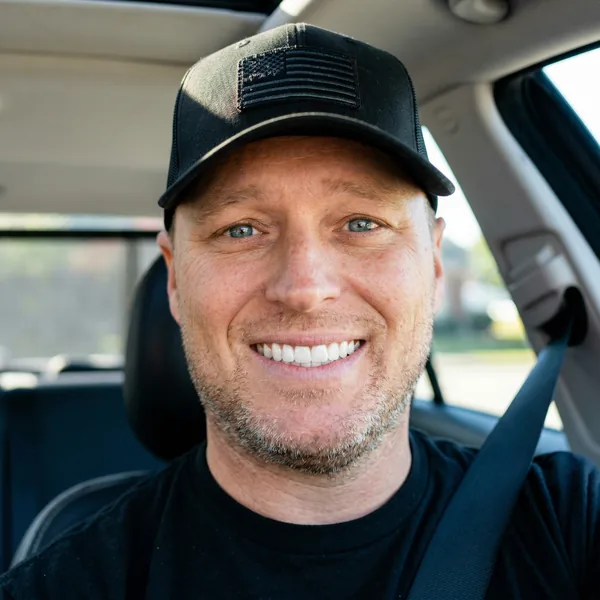
Brian Kiplinger is the founder of Rewrite Your Story — not a therapist, but someone who lived it and built the tool he wishes had existed. Why he built it →
If you’re in crisis, please reach out now: call or text 988 (Suicide & Crisis Lifeline, 24/7). Veterans: dial 988, then press 1, or text 838255. Rewrite Your Story is not therapy and is not a substitute for professional care.