Home › Blog › Healing & Recovery
Healing & Recovery
How to Find Purpose in Sobriety When the Old Center Is Gone
You find purpose in sobriety the same way you find solid ground after a flood: slowly, by testing what holds weight. It tends to come from four places — service to others, repair of what was damaged, a craft you build skill in, and connection that doesn't depend on substances. But first it helps to understand what the using was actually doing for you, because that gap is the shape of what you're for now.
Early recovery removes the center of a life. Whatever time, planning, and emotional energy once went toward getting, using, hiding, or recovering from using — that energy doesn't disappear. It just has nowhere to go. The hole it leaves behind is not a flaw in your recovery. It's a vacancy. And vacancies can be filled on purpose.
Why does sobriety feel empty even when life is better?
This is one of the most common and least discussed parts of early recovery. The chaos is gone, the body is healing, and yet something feels missing. That's not a sign you're doing it wrong.
SAMHSA's framework for recovery names four dimensions that matter for sustained wellness: health, home, purpose, and community. Purpose is defined there as meaningful daily activity — work, school, volunteering, caretaking, or creative pursuits — not a grand calling. If you've secured sobriety and stability but haven't yet rebuilt purpose, the emptiness you feel is simply an unfinished dimension, not a failure of the others. You can read more about how SAMHSA frames recovery and support, and the four dimensions specifically in its page on what recovery involves.
Understanding this can take pressure off. You're not missing a feeling. You're missing a function — something your days are organized around. That's buildable.
What was the using actually doing for you?
Before you can know what you're for now, it helps to know honestly what substances were for. Not morally — functionally.
For some people, using numbed something unbearable. For others, it was the only permission they had to rest, to feel social, to feel powerful, to feel nothing at all for a while. It may have organized time, given a reason to get up, created a community (however costly), or offered a ritual that marked the day's beginning and end.
None of that is a justification. It's a diagnosis. Whatever function using served — numbing, structure, belonging, escape, control — that function needs a replacement that doesn't cost you your life.
If using gave you belonging, purpose will likely come through community. If it gave you structure, purpose may come through craft or routine. If it gave you a way to feel useful or in control, service or repair may fit. This isn't a formula, but it's a place to start looking rather than waiting for purpose to arrive on its own.
Where does purpose actually come from in recovery?
In practice, people tend to find it building in a handful of directions. None are exclusive, and most people end up drawing from more than one.
Service
Helping someone else navigate what you've navigated is one of the most reliable sources of purpose in recovery. This doesn't require a formal role. It can be as simple as being present for someone earlier in the process than you are. SAMHSA notes that peer support — built on shared understanding and mutual respect — helps people stay engaged in recovery and can reduce the likelihood of relapse, which is a case for service being good for the helper, not only the helped.
Repair
Some of the deepest purpose comes from mending what substance use damaged — a relationship, a reputation, trust with your own family, your relationship with your body or your work. Repair is slow and often unglamorous. It rarely looks like a single grand gesture. But showing up consistently, for years, is its own form of meaning-making.
Craft
Learning or returning to a skill — a trade, an art, a sport, a language — gives the mind something to organize around besides the old routines. Craft rewards attention and incremental progress, which is exactly what early recovery needs: proof, day by day, that effort compounds.
Connection
Purpose rarely survives in isolation. Relationships — family, friendships, recovery communities, faith communities, support groups — give a reason to stay steady today for someone other than, or in addition to, yourself. Community is one of SAMHSA's four dimensions of recovery for a reason: it's listed as providing support, friendship, love, and hope, all of which make the daily work of staying sober easier to sustain.
How do you find purpose without rushing it?
There's real risk in treating purpose like an emergency that has to be solved immediately. Early recovery is already demanding. Adding the pressure of "I need to find my calling" on top of staying sober can backfire.
A more honest approach:
- Notice what already pulls your attention, even in small ways — a conversation, a task, a place you feel useful.
- Try things without committing to them as identity. Volunteer once. Take one class. Show up to one meeting you haven't tried.
- Pay attention to what gives you energy afterward, not just what sounds good in theory.
- Let purpose be plural and changing. What organizes year one of recovery may not be what organizes year five.
Research on narrative identity supports the idea that life stories which include agency — a sense that you act rather than are only acted upon — tend to be associated with higher well-being; see the review of narrative identity research. Purpose tends to grow out of small, chosen acts more than out of waiting for clarity to strike.
Does understanding your own story actually help?
There's a reason people in long-term recovery often talk about their path differently than people early on do. A study following people after their last drink found that those with longer-term sobriety were more likely to describe that moment as a turning point toward a better self — what researchers call a self-redemption narrative — and that newly sober people who told their story this way were more likely to stay sober and showed improved health in the months after, even accounting for other factors. The researchers suggest this kind of narrative may help stimulate lasting change, though it's one piece among many. You can read more in the study on sobering stories and self-redemption narratives.
That doesn't mean forcing a positive spin on something that still hurts. It means being willing, over time, to see your own history as something you're building meaning from rather than something that simply happened to you.
This is part of why making sense of your own chapters — including the one where using made a kind of sense, and the one where it stopped — matters more than it might seem. Recovery is not a footnote to the life you had before. It can be the main chapter, and the version of you who got through what you got through has something worth hearing. That's a theme explored further in this piece on the self that made it through.
What role does ongoing support play in finding purpose?
Purpose and support aren't separate tracks. They reinforce each other. Meetings, sponsors, peer groups, and counselors aren't just relapse prevention — they're often where purpose first shows up, in the form of someone needing to hear what you've learned, or in the structure a regular meeting gives your week.
If you're not currently connected to a recovery community or professional support, SAMHSA's National Helpline, 1-800-662-HELP (4357), is a free, confidential, 24/7 service that can connect you to local treatment, support groups, and community organizations — you can find more at the SAMHSA National Helpline page. This is not a replacement for meetings or treatment. It's a way to find them if you don't have them yet. If you want to see how this approach fits people specifically working a recovery path, there's also a page for people in recovery.
If you're building purpose in the middle of recovery, continuing that support isn't a sign you haven't arrived. It's part of how people stay arrived.
Where do you go from here?
Purpose in sobriety isn't a single discovery. It's built, piece by piece, out of service, repair, craft, and connection — informed by an honest look at what the using was doing for you, so you know what you're actually replacing.
If you want a structured way to look back at your own story — not to relive it, but to understand what it's pointing you toward — the free Seven Passages guide walks through the shape most life stories take, including the chapters that feel hardest to name.
When you're ready, you can begin your story.
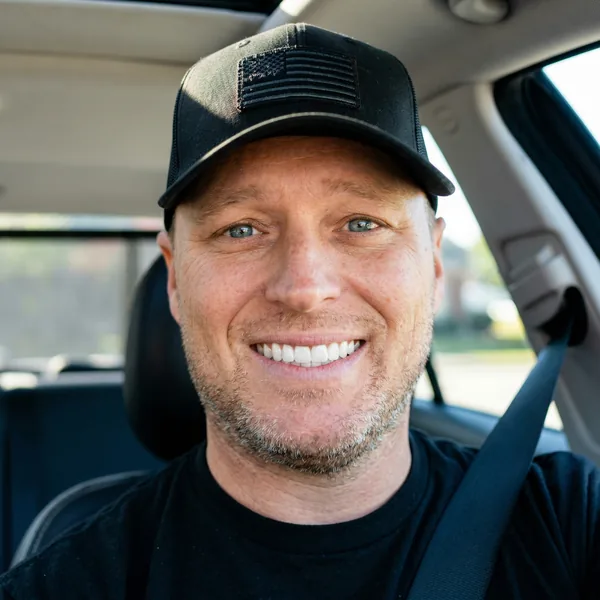
Brian Kiplinger is the founder of Rewrite Your Story — not a therapist, but someone who lived it and built the tool he wishes had existed. Why he built it →
If you’re in crisis, please reach out now: call or text 988 (Suicide & Crisis Lifeline, 24/7). Veterans: dial 988, then press 1, or text 838255. Rewrite Your Story is not therapy and is not a substitute for professional care.