Home › Blog › Healing & Recovery
Healing & Recovery
The Version of You That Made It Through Deserves to Be Heard

There is a version of you that did not make it. You know who that person almost was. You watched them very closely for a long time.
And then — somehow, some way, through something you still cannot fully explain — you did not become that person. You made a different choice. Or someone made one for you. Or your body gave out just enough to stop. Or the right door opened at the exact wrong moment and you walked through it trembling.
However it happened: you are here. The version of you that made it through is reading this sentence right now. That matters more than most people in your life will ever understand.
The Identity Crisis Nobody Warns You About
People talk a lot about what you lose to addiction, to dependence, to the years inside the fog — relationships, jobs, health, trust. Those losses are real. Grief-worthy. Life-altering.
But there is another kind of loss that does not get named as often: the loss of a coherent self-story. The loss of knowing who you are when the substance or the behavior or the chaos is no longer the answer to that question.
Recovery is not just abstinence. Recovery is a complete reconstruction of identity — and that work is as psychological as it is physiological. You do not just stop. You have to become someone different while standing in the wreckage of the person you were, without a clear picture of who the new person is supposed to be.
Many people in recovery describe the first years as profound disorientation. The scaffolding that held the old self in place — substances, relationships, secrecy, survival routines — is gone. There is an unsettling amount of open space where it used to be. That open space is not a symptom of failure. It is the beginning of authorship.
The Story You Have Been Telling in Secret
Most people in recovery carry two stories simultaneously.
There is the story they tell out loud — the cleaned-up version, calibrated for the room, the one that keeps shame at a manageable distance. And then there is the one running beneath it like groundwater: the full, unedited account of what it was actually like. What you saw yourself do. What you survived without telling anyone. What you can still feel in your body if the moment is quiet enough.
That second story is exhausting to carry alone. And it is more common than you think.
The shame that drives the divide between these two versions is not a sign that you are broken. It is a sign that you are human — that you lived through something that put you at war with yourself. Shame is what happens when we are forced to hold the gap between who we wanted to be and who we had to become to survive.
Here is what matters: the gap is not the problem. The gap is the story. And stories, told with honesty and held with care, have a remarkable capacity to close it.
The stories we tell about our darkest seasons are not confessions. They are reclamations. They are the act of saying: this happened to me, and through me, and despite me — and I am still here to tell it.
Why the Before Deserves a Witness
There is a well-meaning but limiting message that circulates in recovery communities: leave the past in the past. Focus on today. Do not look back. There is wisdom in that — compulsive revisiting of old wounds without the tools to process them can be destabilizing. The present moment is genuinely where healing happens.
But leaving the past behind is not the same as understanding it. There is a significant difference between burying a story and integrating it.
Buried stories do not disappear. They show up in the body — in hypervigilance and numbness, in the particular way certain songs make you need to leave the room. They show up in relationships, in patterns you recognize but cannot quite stop. They appear as a low-grade grief that does not have a clear name.
The research on narrative identity — the psychology of how we use storytelling to construct a sense of self — suggests something important: the ability to build a coherent, integrated account of your own life, including the dark chapters, is one of the strongest predictors of long-term wellbeing and psychological resilience. Telling your story, fully and honestly, is not just cathartic. It is structural. It builds something inside you that abstinence alone cannot.
The before deserves a witness. That witness can be you — when you are ready to look, and when you have the right container to hold what you find.
You Are Not Your Rock Bottom. You Are What Happened After It.
Recovery culture has a particular relationship with rock bottom — the idea that things had to get bad enough before they could change. For many people, that is true. The breaking point became the turning point.
But here is what gets lost in that narrative: the most human, most instructive part of your story is not the fall. It is what you did after you hit the floor. The first decision you made when getting up felt impossible. The way you asked for help, or received it badly at first, or pushed it away and then slowly let it in. The relationships you had to grieve in order to choose yourself. The version of you that showed up — to treatment, to a meeting, to a single honest conversation — terrified, uncertain, and stayed anyway.
That is not a shameful story. That is one of the bravest things a human being can live through. And it belongs to you — not just to survive, but to keep.
What Happens When Your Story Exists Outside Your Head
There is a particular kind of freedom that comes from externalizing a story you have carried internally for a long time. When the narrative moves out of your mind and into a form you can hold, read, share, or pass on — something shifts.
It becomes evidence. Evidence that you survived. Evidence that the years of your life — including the ones you would rather forget — were real, and textured, and worth accounting for. Evidence you can hand to your children someday and say: this is where I came from. This is what I did with what happened to me. This is what I learned in the dark.
It also becomes a contribution. Somewhere, someone is living the chapter you already survived. Your story, witnessed and preserved, may be the thing that reaches them when nothing else does.
Introducing Rewrite Your Story
We built Rewrite Your Story for exactly this moment — for the person in recovery who has lived something extraordinary and knows it deserves to be written down, but who cannot face a blank page. Who does not identify as a writer. Who has too much to say to know where to begin.
Here is how it works:
- No writing required — ever. You speak. Your words, your voice, your story told in conversation.
- 2 to 3 guided hours with our structured memoir process — thoughtful prompts that lead you through your chapters at whatever pace feels right.
- Our AI Scribe listens, learns your voice, and writes. The result is a 200 to 300 page hardcover memoir — your life, in your words, shaped into a book you will be proud to hold.
- $397 founding price — honoring those who say yes to their story now.
- Buy one, give one. Every memoir purchased funds a memoir for someone in recovery who cannot afford it. Your story helps preserve someone else's.
This is not a journaling app. This is not a writing course. It is a guided, human-centered process that meets you exactly where you are — in recovery, with a story worth telling — and walks with you until the book is done.
Start Your Memoir at Rewrite Your Story
Who This Is For
This is for you if you have been in recovery long enough to have perspective on the journey and are ready to look back without being pulled under. If you have thought about writing your story — for your kids, for yourself, for the person you used to be — but never knew how to start. If you want something physical that can sit on a shelf, something your family can find someday and understand what you went through, and what you chose.
You do not have to be a great storyteller. You do not have to have your narrative figured out. You do not have to know the ending. You just have to be willing to sit down, speak honestly, and trust that the story knows where it wants to go.
The Last Thing Worth Saying
You made it through something that many people do not. And for a long time — maybe still — that felt like a debt to pay, or a secret to keep, or a weight to carry quietly so as not to burden anyone with the full truth of what it cost.
But your story was never meant to be kept. It was meant to be told. Carefully. Honestly. In your own words, in your own voice, at whatever pace your healing allows.
You survived. That deserves a record. And the people who come after you — the ones still in the chapter you have already finished — they deserve to find your words waiting for them.
Start today. Speak your story into existence. Let us help you hold it.
Begin at app.rewriteyourstory.ai — 200-300 pages. No writing required. 2-3 hours of guided speaking. $397 founding price. Buy one, give one.
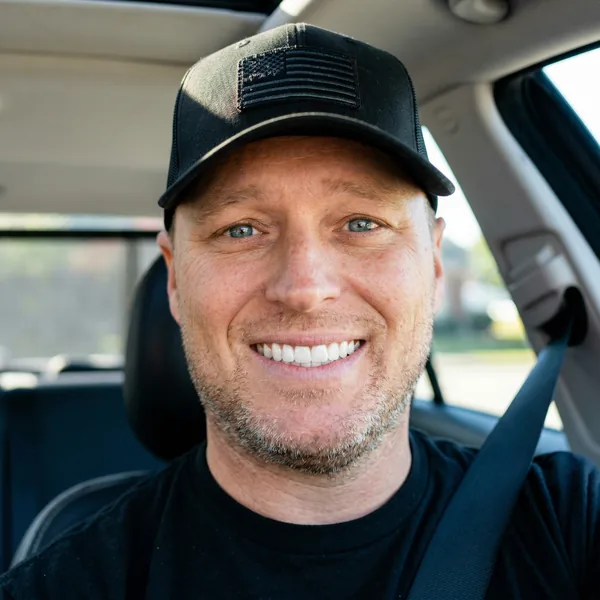
Brian Kiplinger is the founder of Rewrite Your Story — not a therapist, but someone who lived it and built the tool he wishes had existed. Why he built it →
If you’re in crisis, please reach out now: call or text 988 (Suicide & Crisis Lifeline, 24/7). Veterans: dial 988, then press 1, or text 838255. Rewrite Your Story is not therapy and is not a substitute for professional care.